



Water preparation
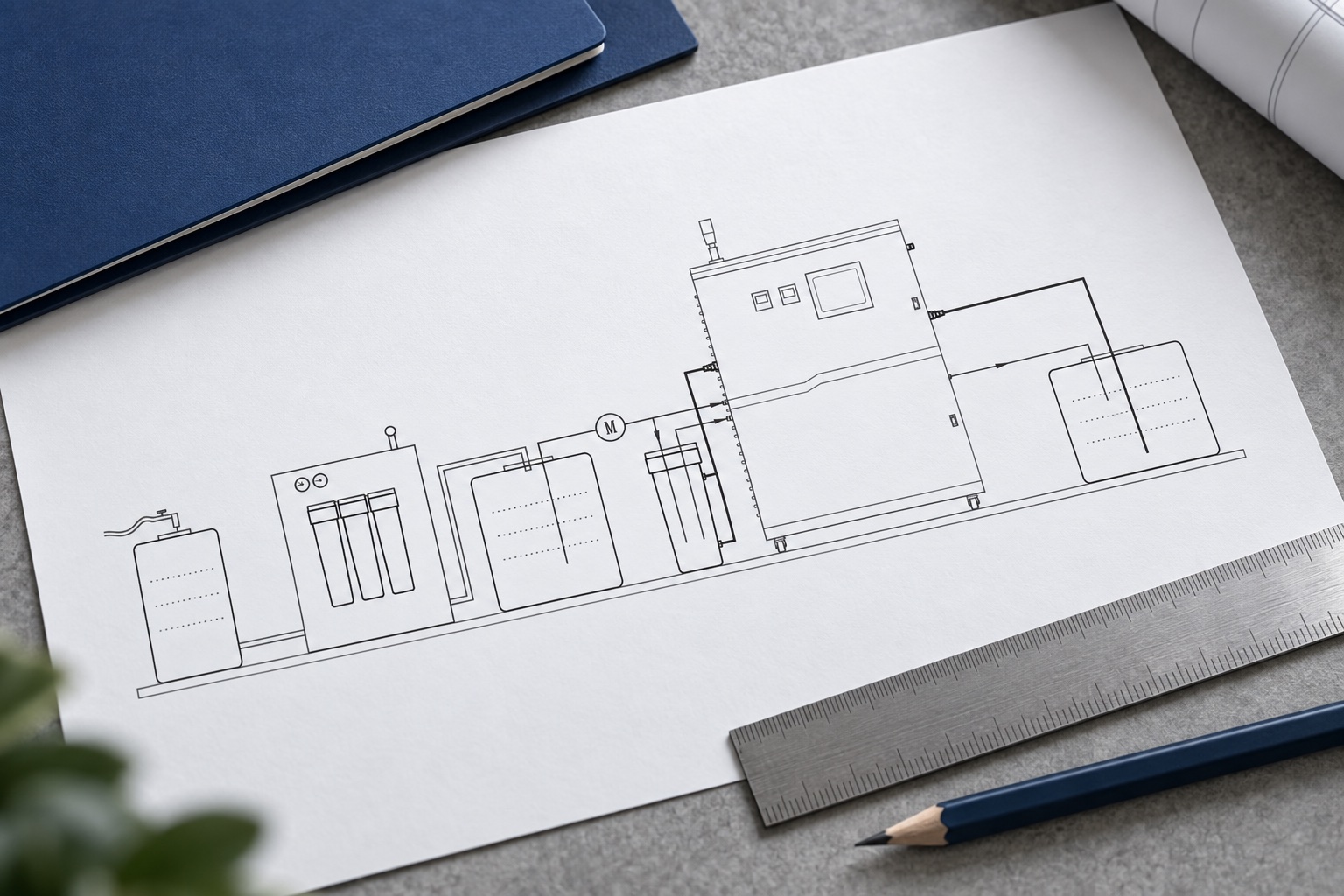
Existing treatment or additional equipment needed for the proposed system.
Compare equipment scope, site work and running costs. Build a budget around the way your system will operate.
A machine quotation and a ready-to-operate project budget cover different things. Check where each quoted amount begins and ends.
The proposed model or configuration and the accessories explicitly listed.
Any additional water treatment, tanks, pumps, instruments and controls included in the offer.
Packing, freight, insurance and import charges where applicable, with the delivery term and named destination.
Site connections, installation, commissioning, training and any required testing or validation. Confirm who provides each item.
Operating costs, maintenance, replacements and other relevant costs over the period you choose.
Existing site equipment can change what you need to buy. Review the scope around the generator before comparing package prices.
Proposed output,
feed route and controls
Existing treatment or additional equipment needed for the proposed system.
Any required tanks, pumps and connections.
Instruments, signals and integration work included in the proposal.
Utilities, installation, commissioning and agreed documentation.
An excluded item may still be needed for the project. Keep it in the budget under the party responsible for supplying it.
Use consumption at the proposed operating point and local prices. Include supporting equipment as well as the generator.
Use the same intended treatment task, required solution quality and usable demand for both options. If those differ, the costs are not yet comparable.
Record the amount purchased and used, delivery charges, storage, handling, testing, losses and relevant equipment or service costs. Use invoices and operating records where available.
Combine the installed scope with operating costs, maintenance, replacements and backup. Use realistic operating hours and usable output, rather than maximum production multiplied by every hour in the year.
If recurring estimates already include a replacement or backup cost, do not add it again. For multi-year decisions, keep cash-flow timing visible and use a consistent inflation and discounting basis.
Cost per usable litre is meaningful only when solution quality and use are comparable. A lower price per generated litre does not establish a lower cost for the treatment task.
Organise what you already know. Mark approximate inputs as estimates and leave unresolved items as questions.
For your own preparation. Complete what you know; mark other items “to confirm”.
| Project input | Your notes |
|---|---|
| Application and destination country | Space for handwritten notes |
| Required solution quality, if known | Space for handwritten notes |
| Daily demand and busiest operating period | Space for handwritten notes |
| Planned operating hours and days | Space for handwritten notes |
| Current supply method and cost period | Space for handwritten notes |
| Existing water treatment, tanks and utilities | Space for handwritten notes |
| Required scope and delivery destination | Space for handwritten notes |
| Currency, local input prices and open questions | Space for handwritten notes |
Printing does not send information to Xiaoya. You can summarise relevant details in your enquiry.
Already comparing formal offers? Use the RFQ Checklist to record supplier responses, scope differences and commercial terms.
Tell Xiaoya what the system needs to do, where it will operate and what equipment is already available. Clarify the configuration, quotation scope and inputs that still need confirmation.
You do not need a completed cost model to start.
Yes. Start with the application, destination and approximate demand. Identify the missing information so it can be addressed as the proposal develops.
Yes. Compare the required solution specification, feed route, water preparation, controls, operating duty and included equipment as well as the flow rating.
No. A useful estimate needs an energy-use basis for the operating conditions and the equipment included in the calculation. Confirm those assumptions before using the result in a budget.
No. Payback also depends on the initial project cost, utilisation, other running costs and the costs genuinely avoided in your current method. A site-specific comparison is needed.