


Hypochloric acid water, why do we advise customers to change "buy water" to "make water"
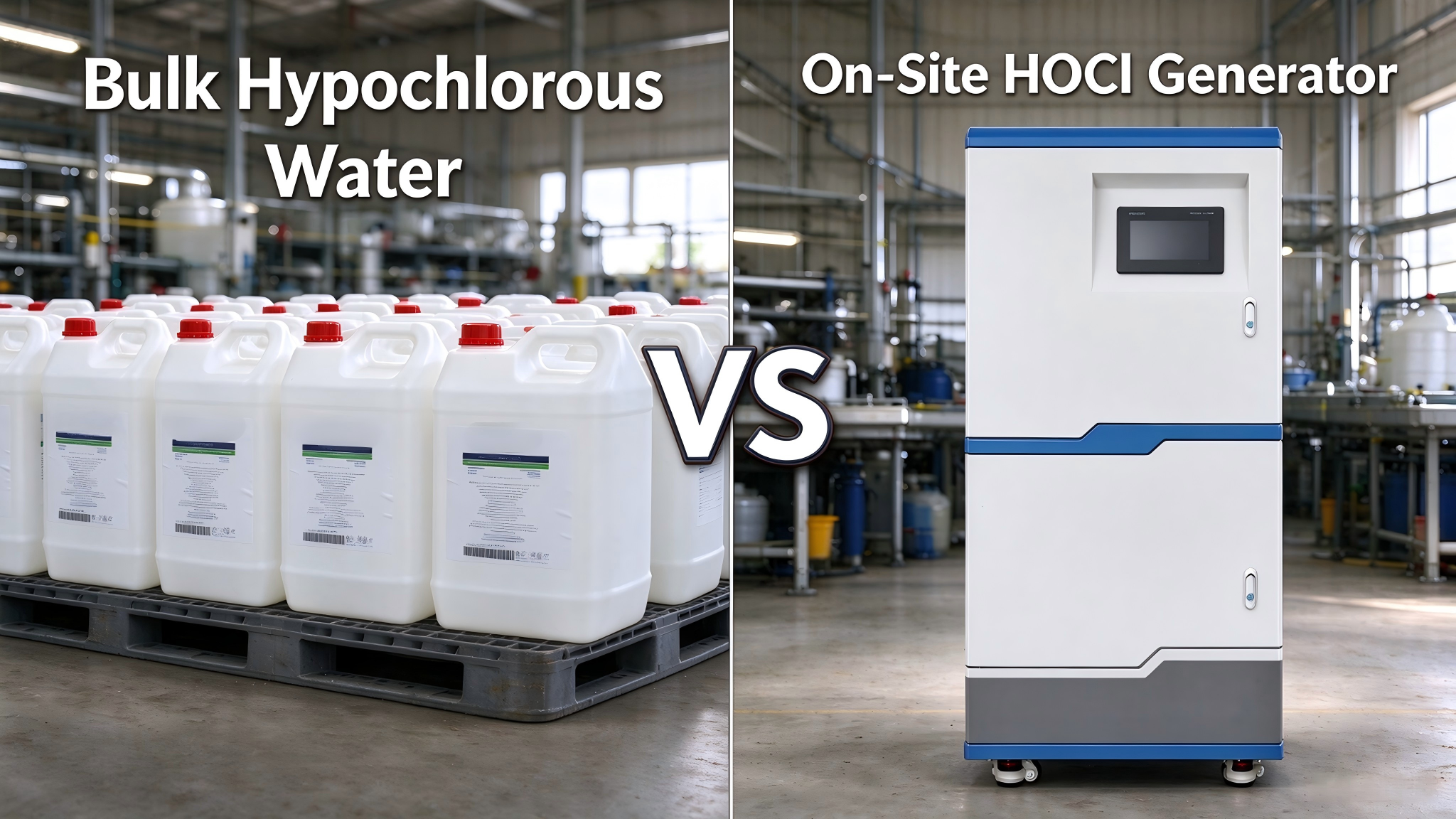
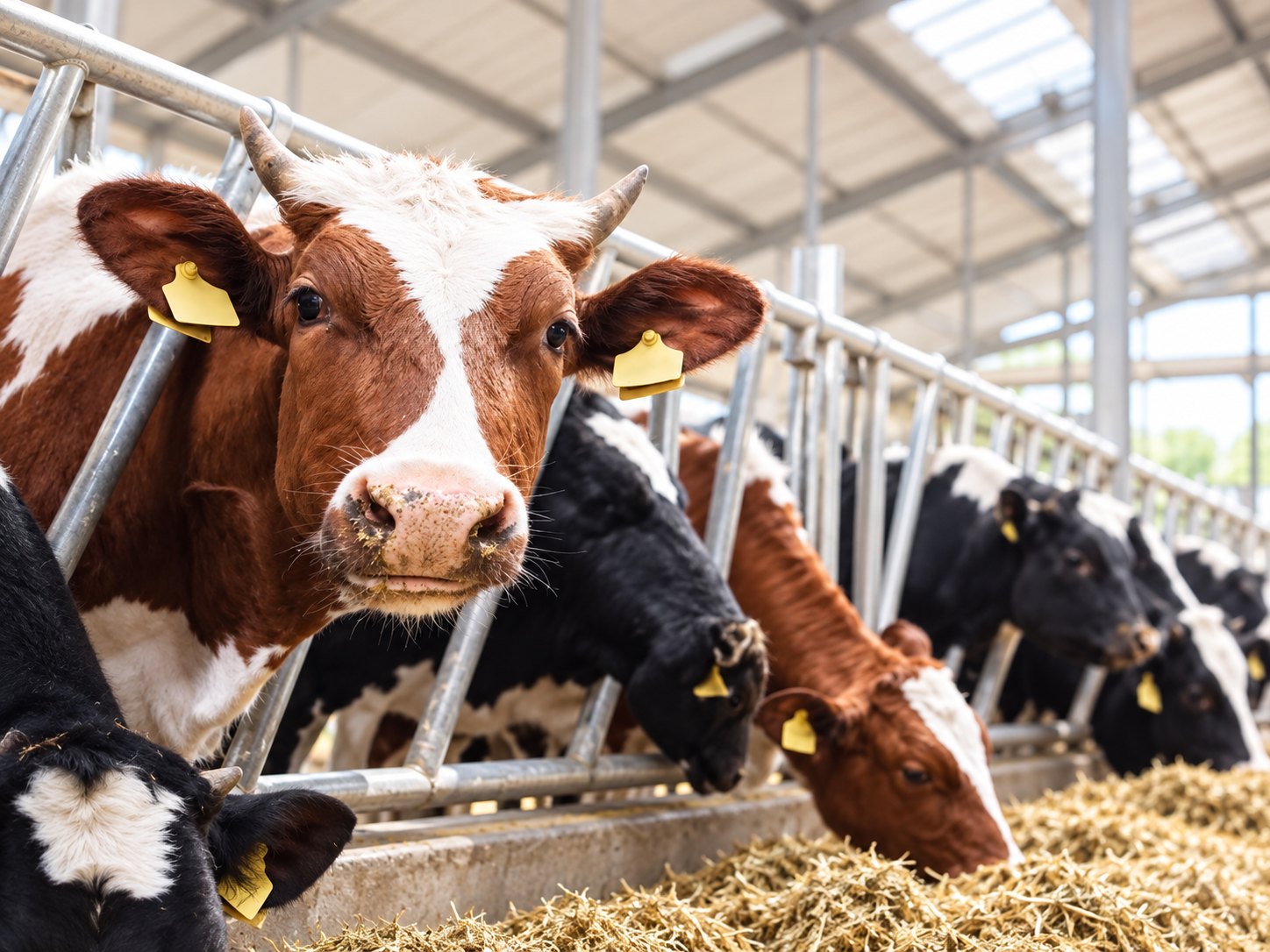
Every time we help design a disinfection plan for the farm, we first ask, ‘Are we using bottled water or on-site production?’. After asking too many questions, I realized that many customers actually spend most of their money on disinfectant water. The common concentration of hypochlorous acid in bottled water on the market is 200 ppm, which is only 0.02% in proportion. This means that only 0.2 grams of hypochlorous acid are actually used in one liter of water, and the rest is almost entirely water.
More importantly, the 0.2 grams of hypochlorous acid also decreases with the increase of storage time. The disinfectant ability of hypochlorous acid comes from its tendency to undergo chemical reactions, which makes it difficult to retain. There are studies that have conducted storage experiments. If hypochlorous acid water with a pH of around 6.4 is placed in a dark, sealed, and room temperature environment, free chlorine will be lost by 16% to 20% after 34 days, which is already an almost ideal storage condition. On the other hand, in reality, farm warehouses are much rougher, with buckets repeatedly opened, pump tubes for pumping in and out, skylights in metal sheds leaking light, and temperatures of around 37.8 degrees Celsius in summer, all of which are pulling down the effective chlorine in the buckets. The customer spent money on the concentration of the label, and indeed used the attenuated concentration, but no one reimbursed the price difference in between.
Of course, there are also well made barrel products with stable formulas and sealed storage and transportation, which can control attenuation within 10% within one year. The problem is that this promise is based on good sealing and proper storage and transportation, and the validity period is calculated from the day of production, not the day of arrival. After several rounds of turnover, long-distance transportation, and warehouse queues, the dealer in the middle has quietly passed for several months. A farm that uses slowly often has the last few barrels spinning around the expiration date, and if you continue to use them, the effective chlorine concentration will be uncertain; If scrapped, the shipping and storage fees paid earlier will sink together. Although this account cannot be seen on the quotation, anyone who inventories at the end of the month will be able to access it.
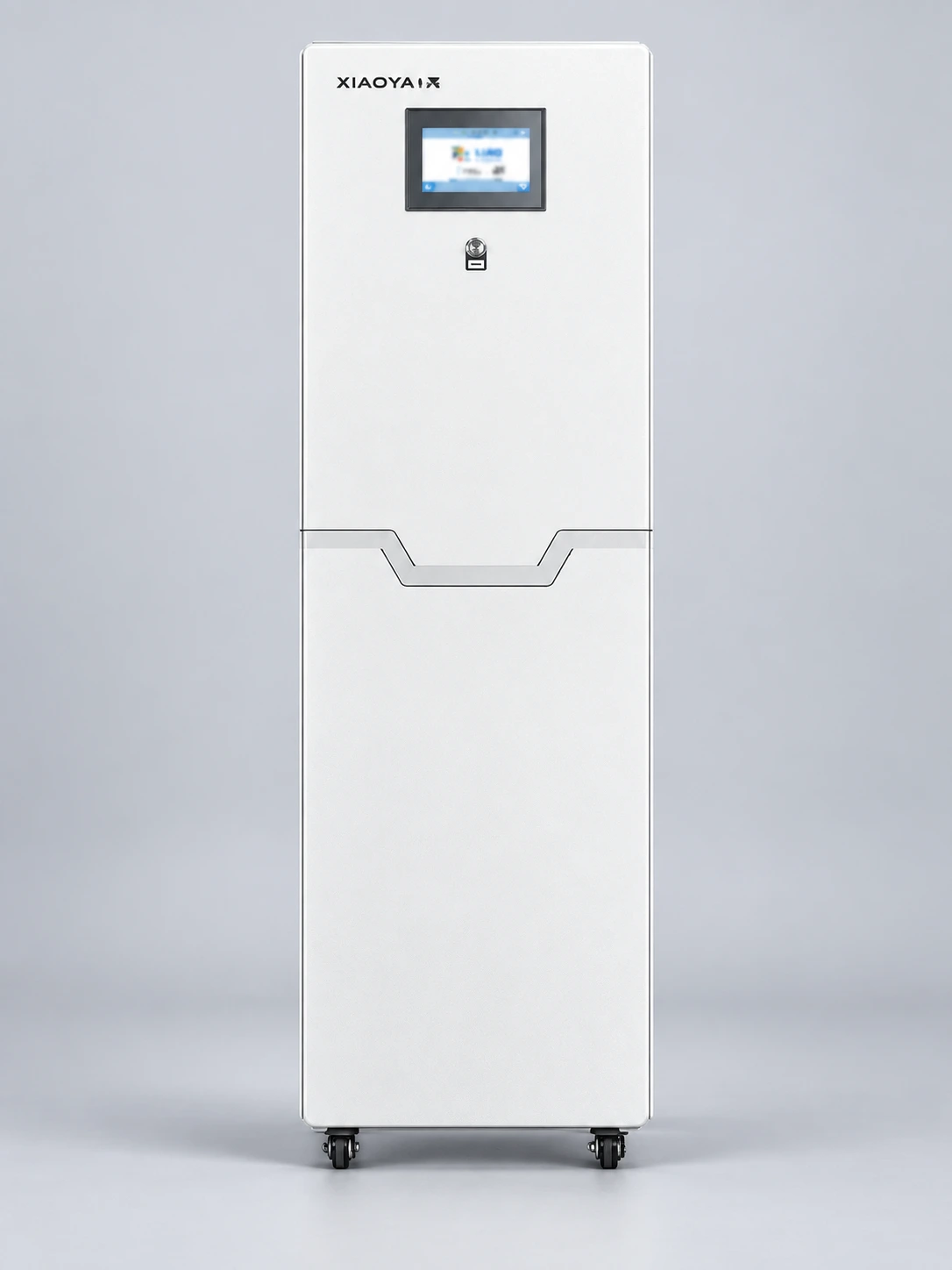
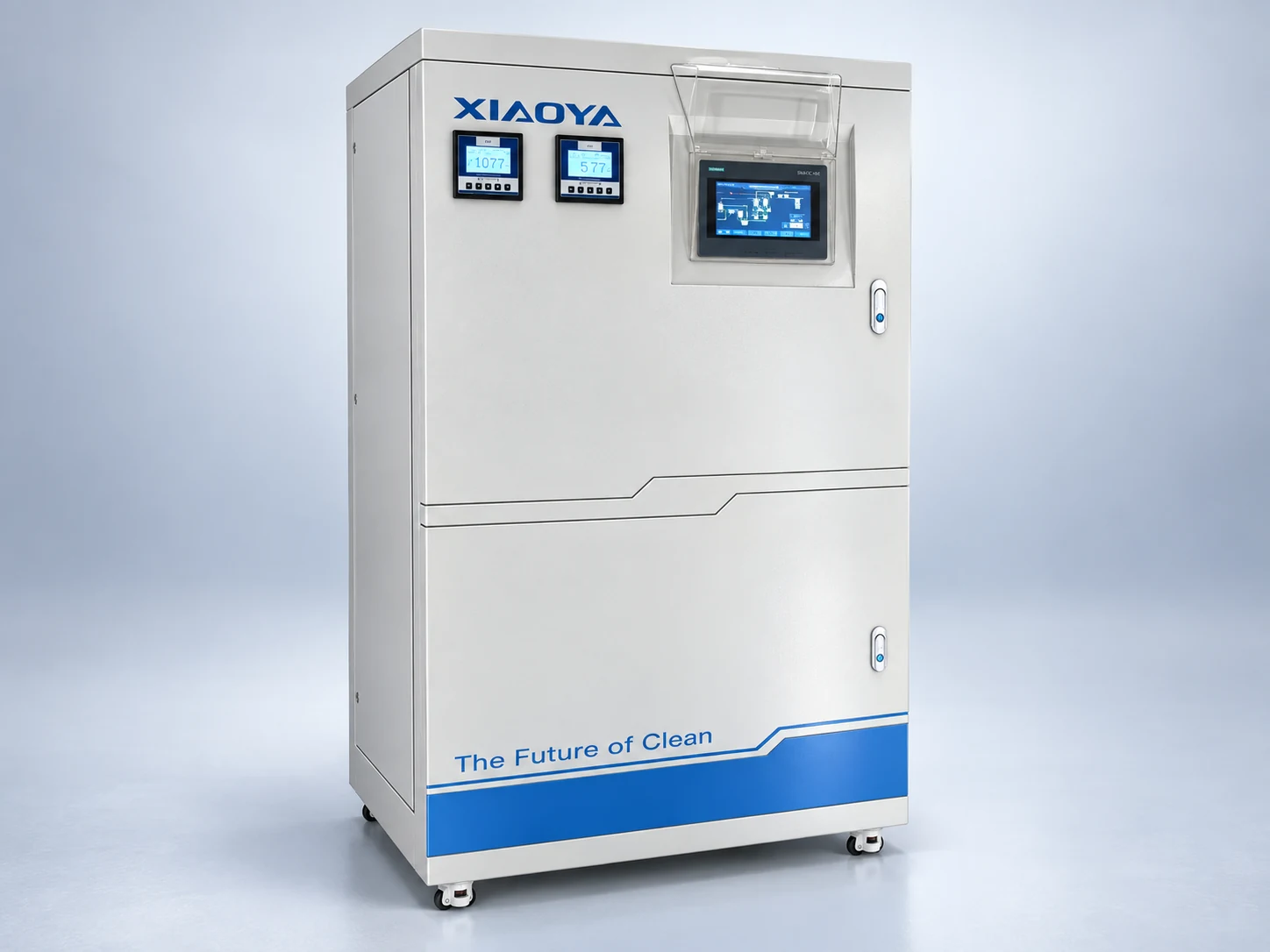
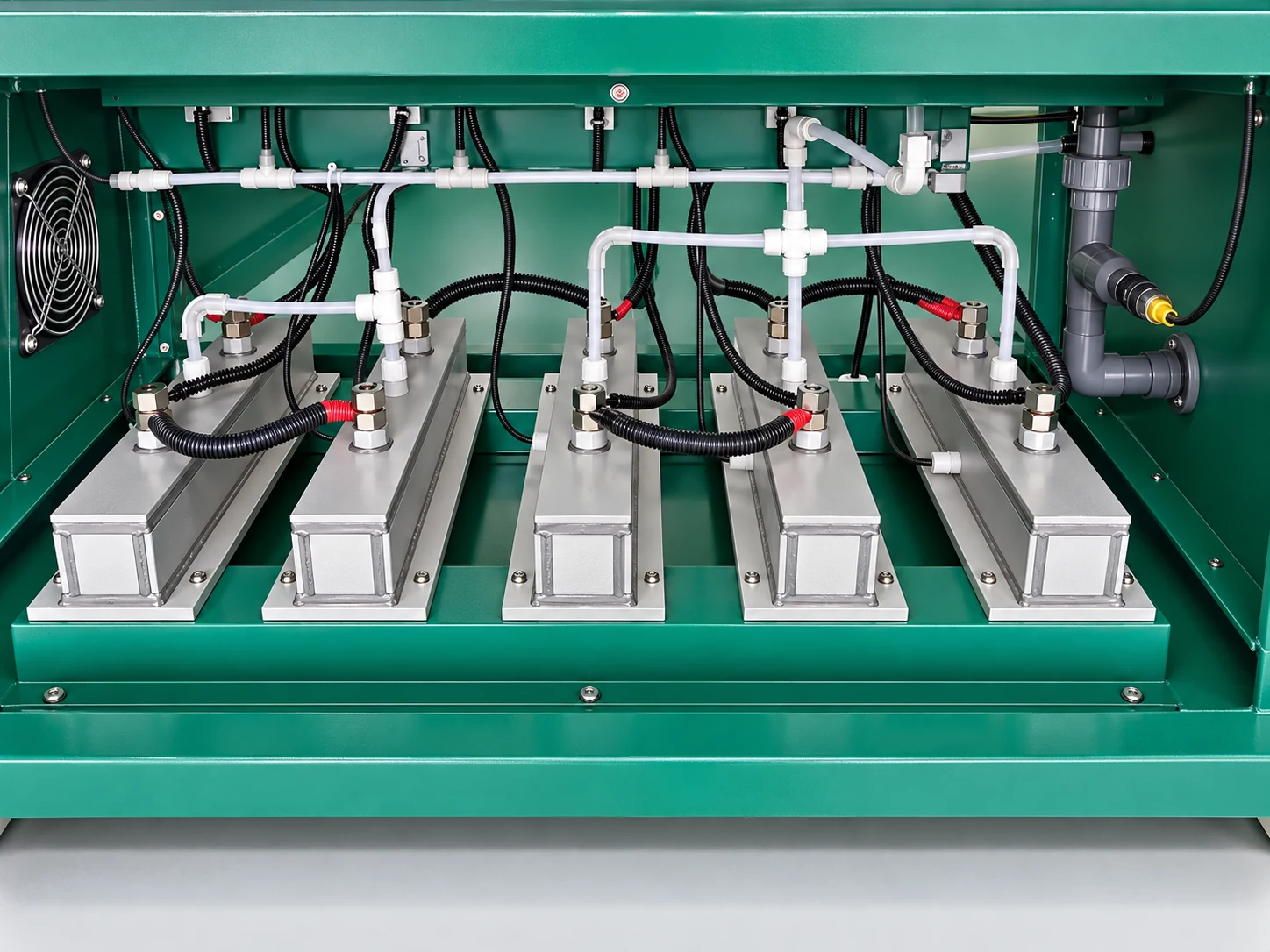
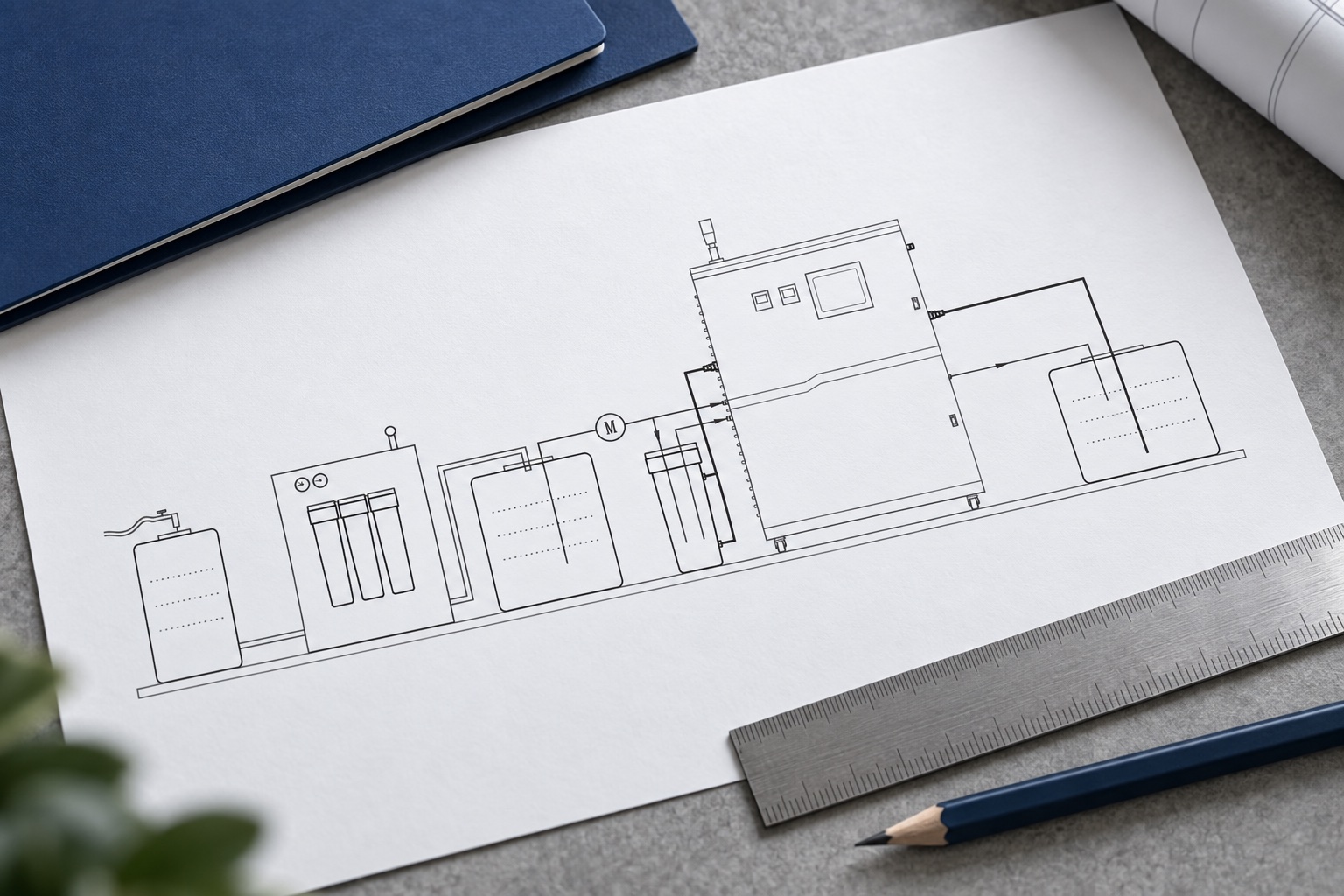
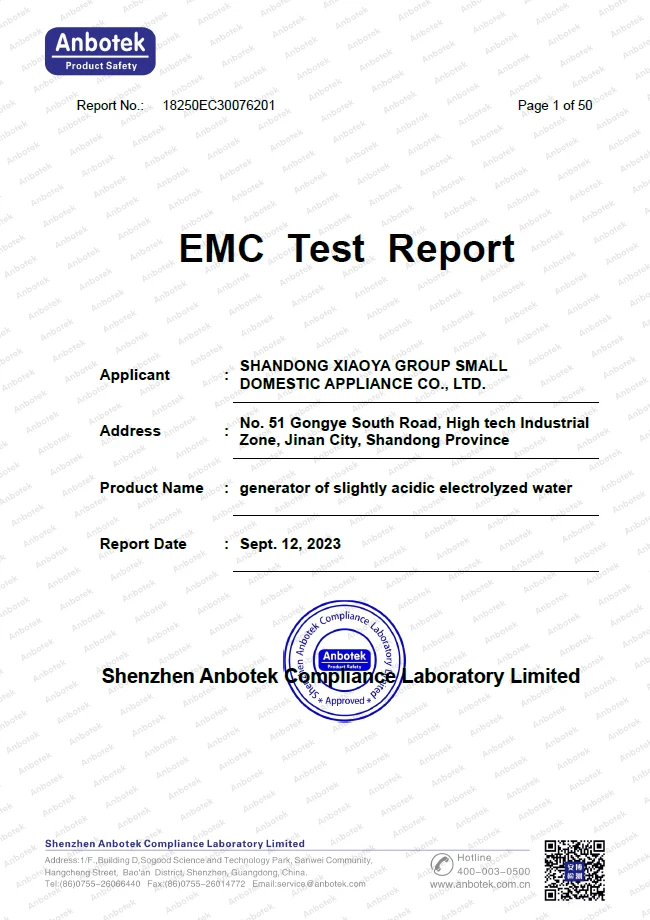
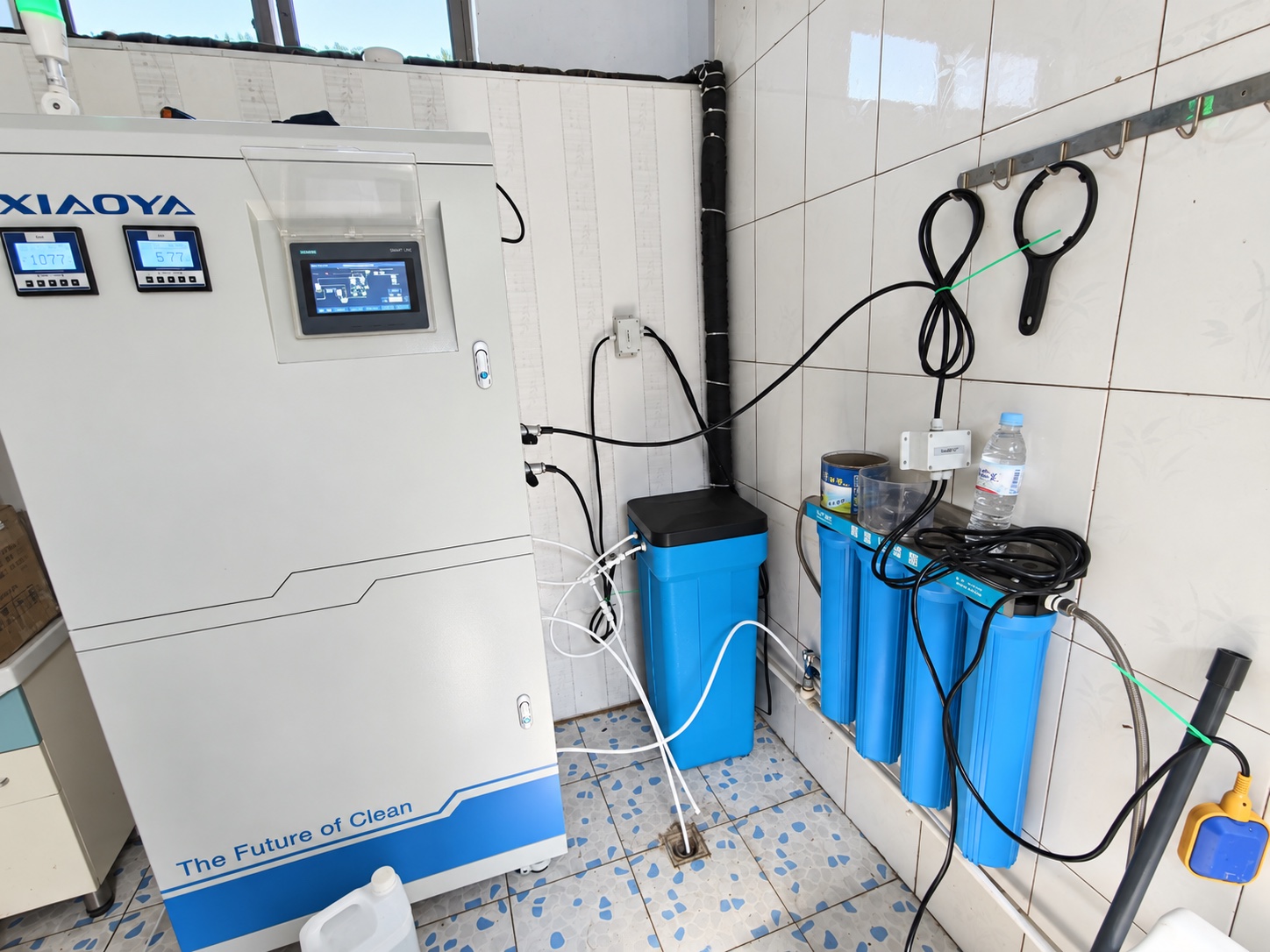
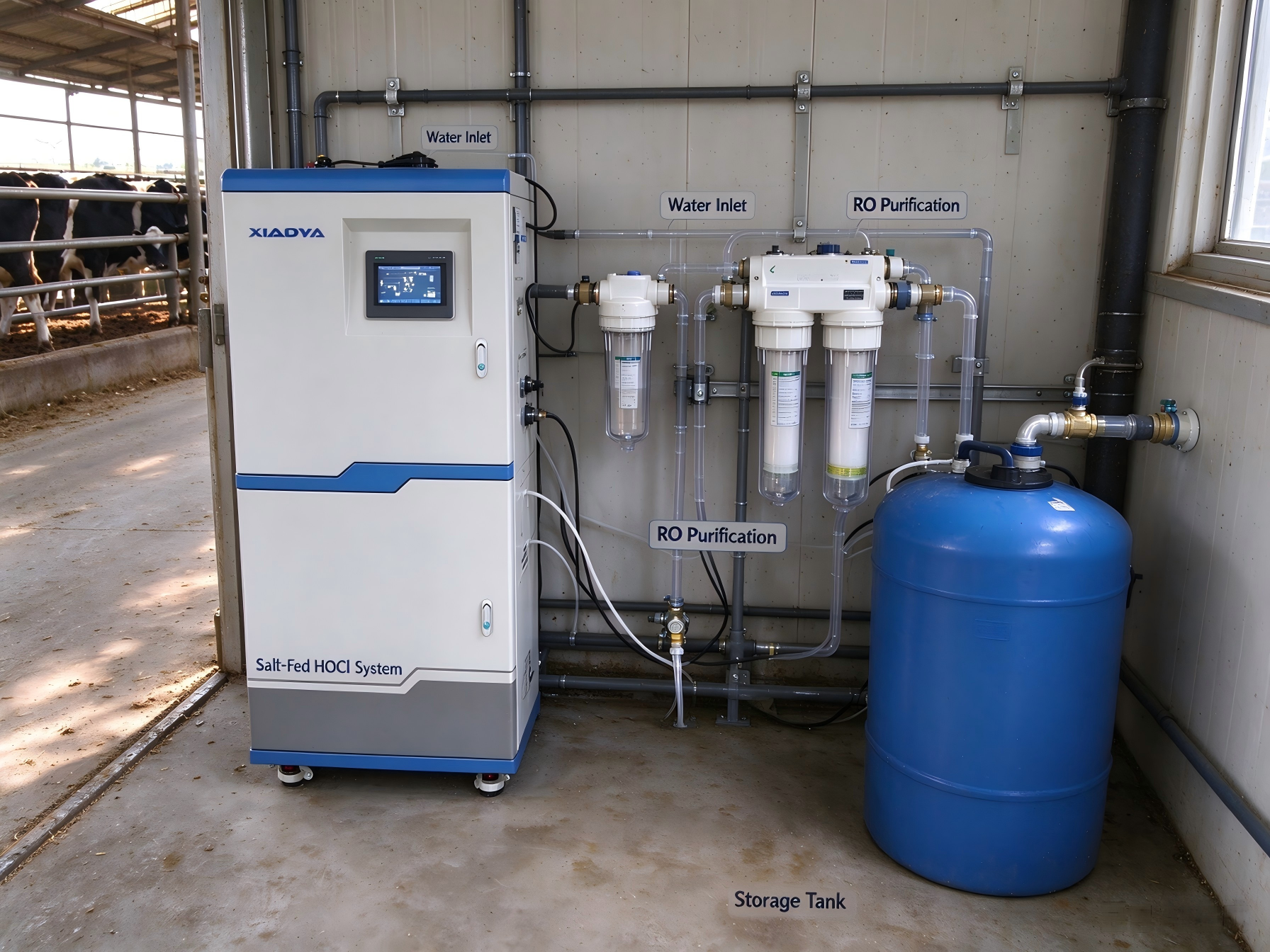
If we put the three accounts of shipping cost, attenuation, and expiration date together, we would rather focus our product on the hypochlorous acid generator. The biggest feature of a hypochlorous acid generator is its ability to produce water on the spot, without the need to buy finished water. The machine only needs to be connected to water, electricity, and electrolyte, and the water can be made into hypochlorous acid water on site. It can produce as much as needed today without a shelf life, and there is no such thing as expiration date or scrap. The things to be transported have also changed, no longer just barrels of diluent, but a machine that takes water and electrolyte on-site, greatly reducing transportation and storage costs.
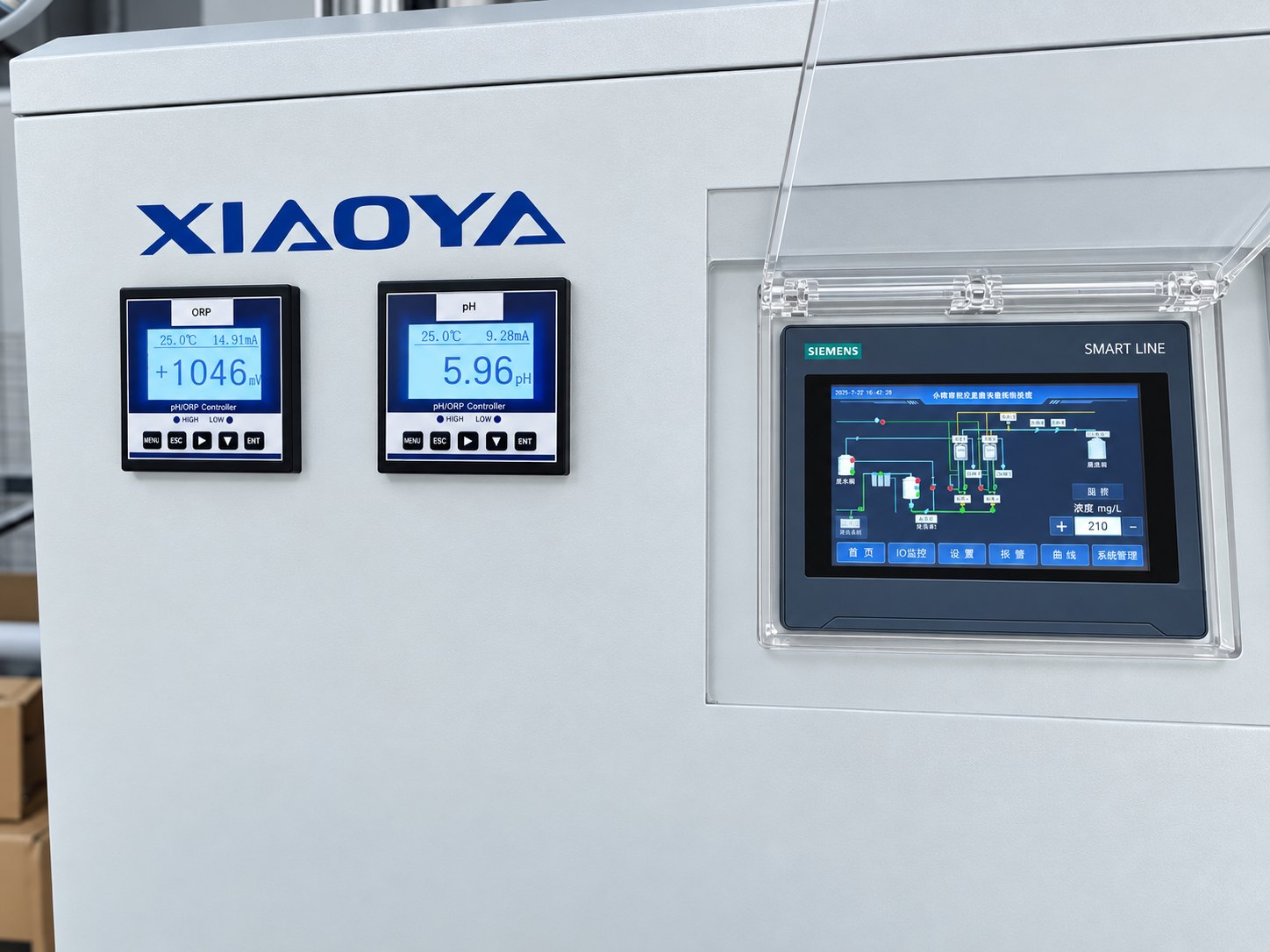
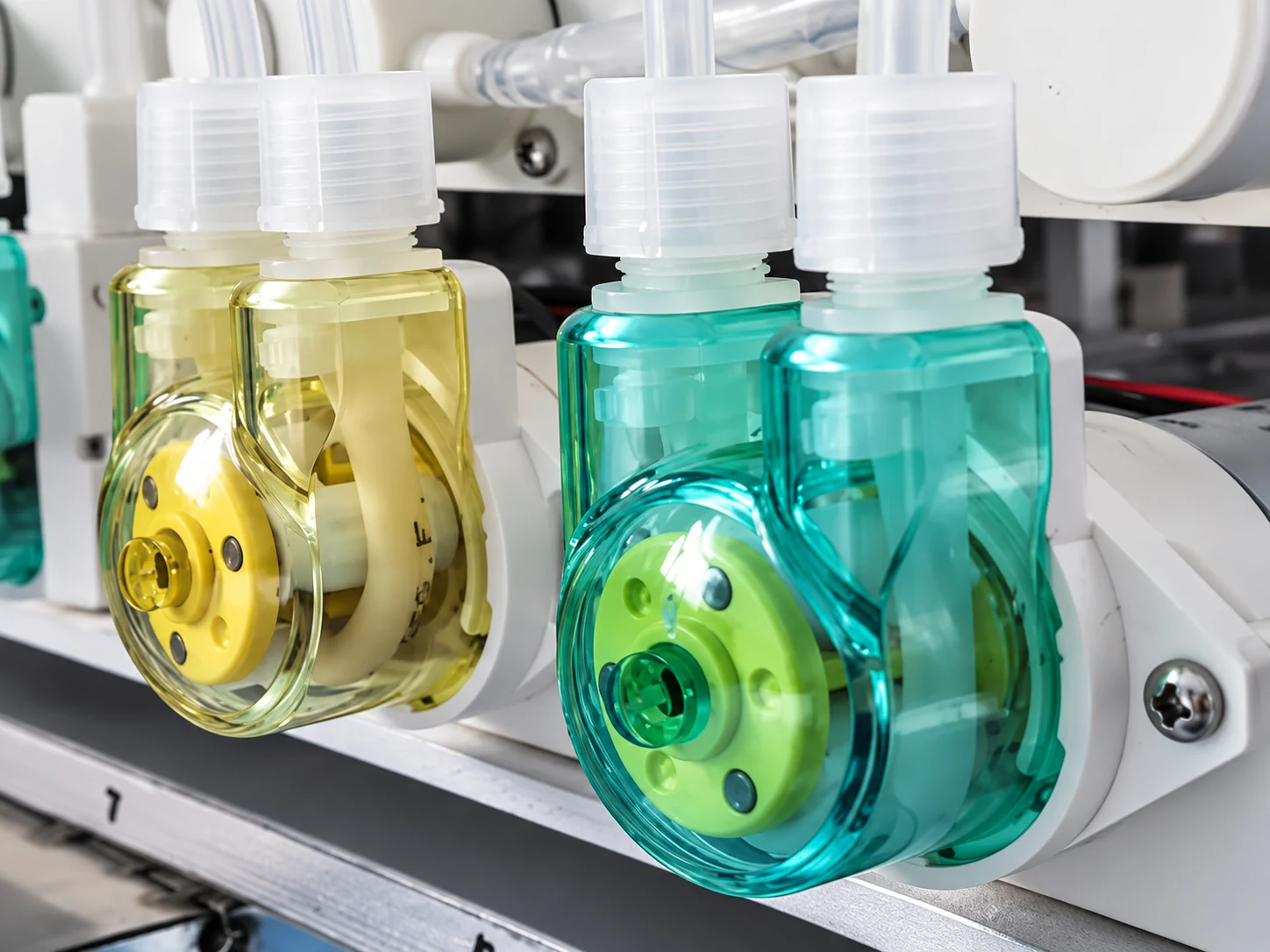
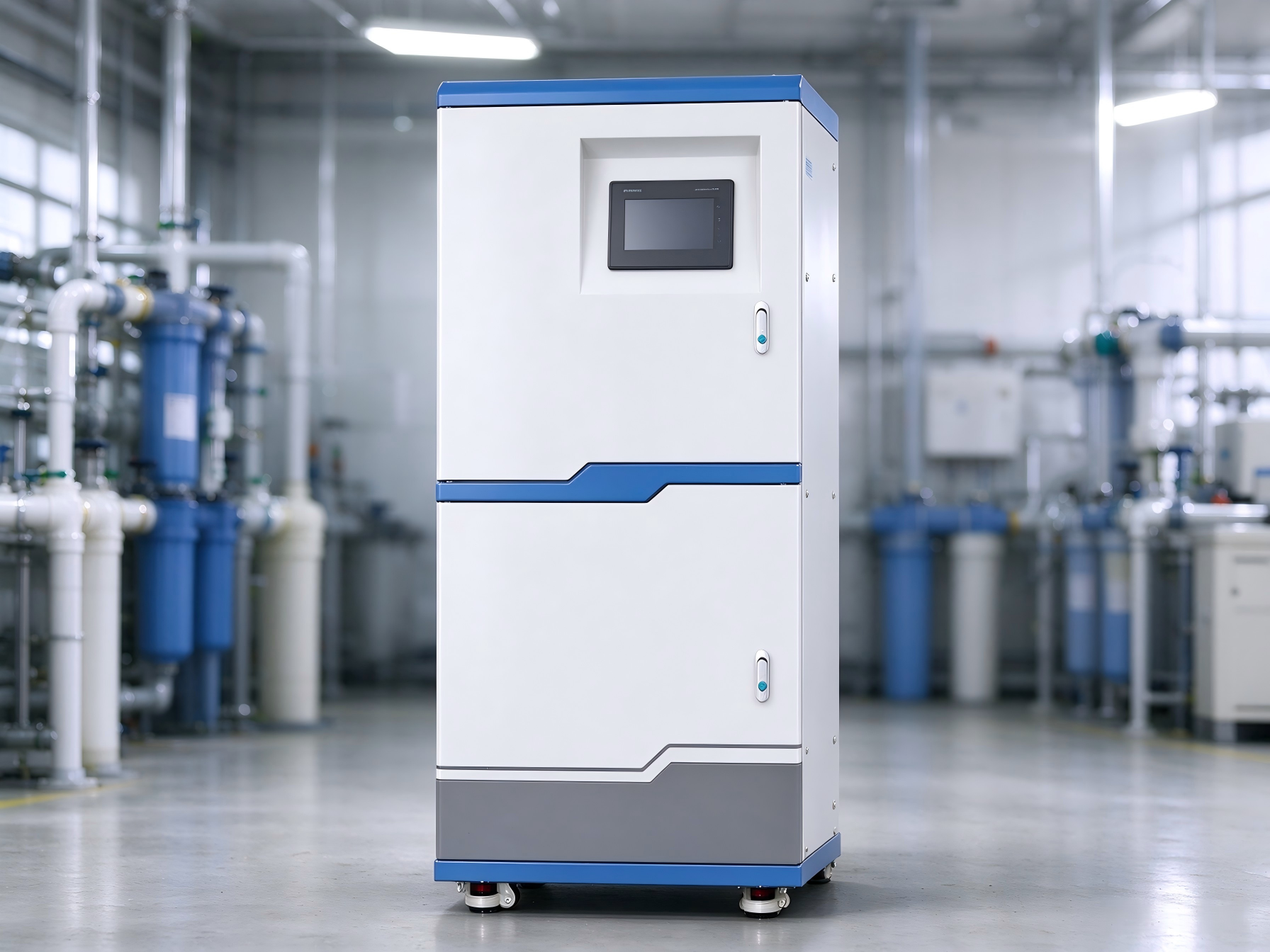
Taking the Xiaoya AQ series as an example, the effluent pH is between 5.0 and 6.5, the effective chlorine concentration can be adjusted from 10 to 300 ppm, and different concentration levels are used for disinfection of drinking water lines, hand soaking of personnel, and immersion of utensils. There are more than twelve preset formulas stored in the body, and the designed lifespan of the electrolytic cell is over 5000 hours. It comes with a fluid replenishment prompt and can also be connected to the Internet of Things. Sitting in the office, you can see the operating status of the day. Hypochloric acid water has transformed from a stock that requires checking expiration dates, inventory, and moving up and down, to something that can be easily connected to water and electricity. The rows of buckets in the warehouse and the work that revolves around them can be eliminated.
A practical suggestion for customers who are comparing prices and need hypochlorous acid water. Don’t directly deduct the unit price of bottled water from the selling price of the machine, as the calculated figures are frightening and meaningless. First, replace the accounts on both sides with the same algorithm and calculate the cost based on each liter of effective chlorine. Then, spread the costs of decay, scrapping, and inventory management evenly, so that the comparison has reference value. Verification is also simple. Ask the supplier to bring test strips or portable detectors to the door, make a batch of water in person, measure the concentration on the spot, and calculate the amount measured. By the way, let me clarify two things: how often does the electrolyte need to be replenished, what is its price, how long does it take to replace the electrolytic cell, and what will be the main areas of continuous spending in the next few years.
Disinfection is just the last action of spraying out the medicine. How much to buy ahead, how long to store, and how much concentration is left determine whether this action is worth it or not. We provide freshly made and used hypochlorous acid generators from Xiaoya Group, and can provide complete solutions and supporting facilities according to on-site usage needs. If you are also troubled by disinfection of your farm, feel free to contact us.