


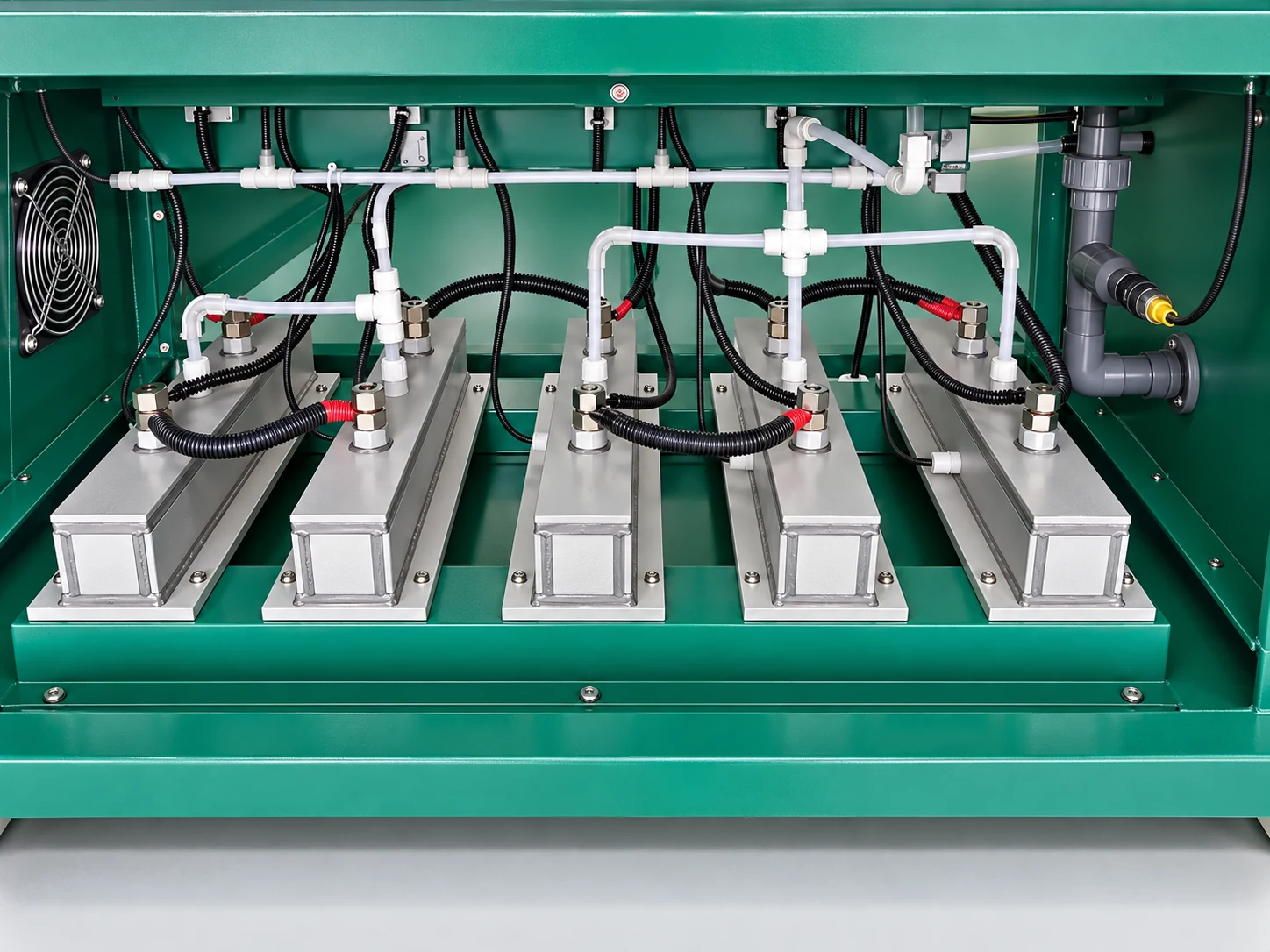
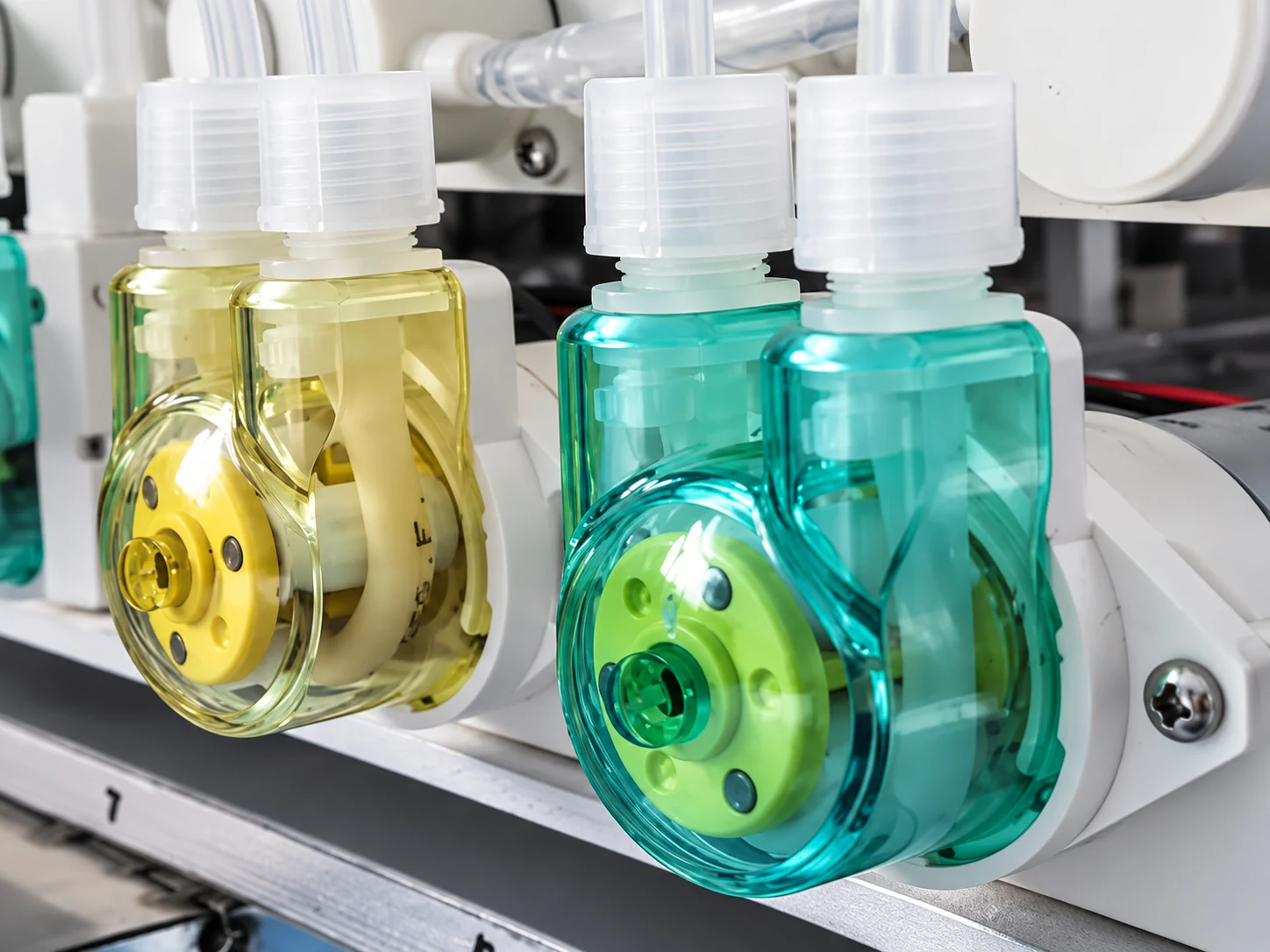
Feed circuit
Feed container, pickup tube, dosing components and connections.
Review against the specified feed chemical.Water & feed requirements
Review material compatibility, gas handling and operating conditions before connecting a generator to your process.
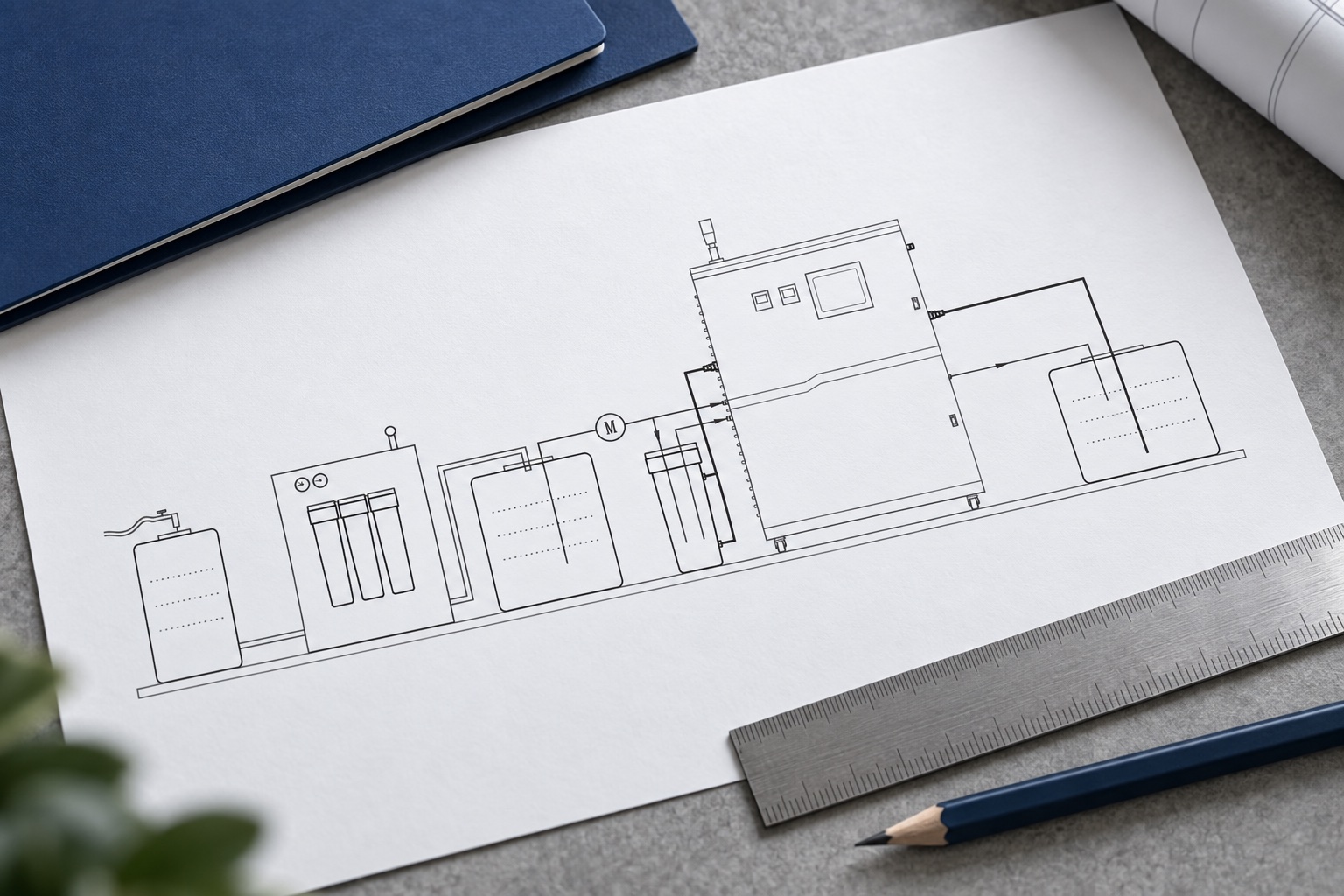
The generator enclosure, feed circuit and generated-solution line perform different jobs. Their materials and handling requirements should be reviewed separately.
Feed container, pickup tube, dosing components and connections.
Review against the specified feed chemical.Water & feed requirementsOutlet, buffer tank, delivery pump, pipework and application fittings.
Review the actual solution and exposure.Inspect the material scopeComponents exposed during flushing, cleaning or maintenance.
Review the approved service procedure.Maintenance & spare partsXiaoya selects materials according to your application. Specify the material grade, solution conditions and operating requirements for technical review.

Exposed tube, fittings, valves or other copper-containing parts.
Copper components pose a risk of corrosion. We will identify these components in the proposed circuit and evaluate alternative solutions.
Exact polymer, fittings, jointing method and supplier specification.
Confirm chemical suitability together with temperature and pressure ratings. “Plastic” is not a complete specification.
Grade, finish, welds and the geometry of nozzles or fittings.
Review the actual solution and contact duration. A stainless-steel component is not universally corrosion-proof.
Elastomer or coating type, including small parts within assemblies.
Include both operating fluid and approved cleaning exposure. Check the component manufacturer’s compatibility information.
A short spray, a continuously wetted pipe and a stored solution place different demands on components.
Describe normal operation and cleaning separately when sharing your material requirements.
Xiaoya’s technical responses identify hydrogen discharge and ventilation needs. Review the selected generator’s gas-handling arrangement with the site engineering team.
Confirm where gas is released, how it is routed and what ventilation the equipment requires. Do not seal or obstruct required vents.
Assess enclosed locations and ignition sources as part of the site design. Ventilation capacity and discharge details must come from the selected equipment and site assessment.
Confirm the container, connections, protection from light and temperature conditions for generated solution.
Do not apply storage-container guidance to an electrolyzer enclosure, or assume a buffer tank can be hermetically sealed. Its venting and pressure arrangements depend on the system design.
Provide the room layout, proposed discharge route and available ventilation for technical review.
Prepare your installation informationAgree the model-specific operating instructions and responsibilities for feed changes, abnormal conditions and maintenance.
Use only the specified feed and approved cleaning materials. Identify containers and connections so feed, generated solution and service chemicals are not confused.
Do not mix generated HOCl solution with other cleaners or chemicals. Follow the material safety information and the approved equipment procedure.
Confirm the feed routeUse the agreed settings and inspection routine. Keep ventilation and access routes clear, and check for leaks or unusual changes in components.
Follow the equipment’s stop and escalation instructions. Keep personnel away from a suspected release and do not bypass protection or repeatedly restart to clear an alarm. Use the site emergency procedure where needed.
Have trained personnel apply the specified isolation procedure for electrical power, fluid supply and pressure before work. Confirm cleaning chemicals, protective equipment and restart checks from the approved instructions.
Review compatibility and operating requirements again when a feed supplier, wetted part, cleaning procedure or intended use changes. Record the accepted configuration.
It needs review. Share the grade, condition, joints, operating temperature and exposure conditions; include seals and other wetted parts. The material name alone does not establish suitability.
No single concentration settles the question. Feed handling, cleaning, splash potential and the task itself also matter. Use the applicable safety information and site risk assessment to specify protection.
Discuss the model manual, connection and discharge requirements, feed safety information, wetted-material details, protective functions and maintenance isolation instructions relevant to the proposed scope.
Share the intended use, existing materials, location and operating conditions. Xiaoya can discuss the generator configuration and the information needed for site review.
Discuss Safety & Material Requirements